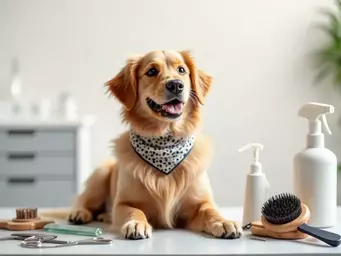
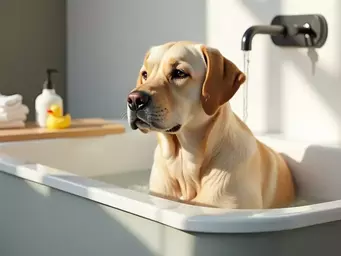
Creating a positive bathing experience for your furry friend is essential for their comfort and hygiene. As we focus on the unique needs of puppies and senior dogs, understanding these differences can make bath time enjoyable rather than stressful.
What You Will Learn
Puppies require gentle handling and hypoallergenic shampoos to protect their sensitive skin.
Senior dogs may need mobility support and moisturizing products due to thinning skin and health conditions.
Creating a safe bathing environment with non-slip mats and warm water is crucial for both age groups.
Regular vet check-ups help monitor skin sensitivities and ensure appropriate grooming products are used.
Age-Specific Bathing Approaches: Puppies vs. Senior Dogs
This visual outlines the distinct bathing considerations and common concerns for puppies and senior dogs, highlighting tailored approaches for each life stage.
Bathing Techniques & Considerations
Puppies
✓ Warm, gentle water
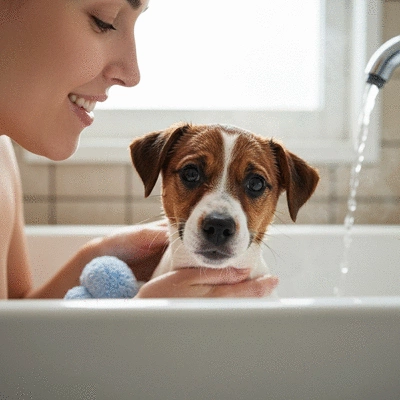
✓ Soft sponges for minimal shock
✓ Hypoallergenic shampoo
✓ Gentle handling, gradual wetting
Senior Dogs
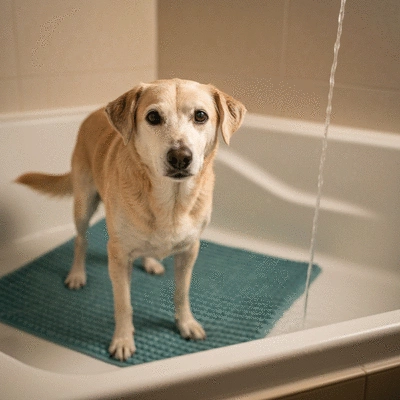
✓ Extra support (non-slip mat)
✓ Moisturizing, pH-balanced shampoo
✓ Mobility support
✓ Avoiding slipping, gentle approach
Common Concerns & Solutions
Puppies
✓ Delicate skin, prone to irritation
✓ Puppy acne, food allergies
✓ Anxiety during bath time
✓ Use hypoallergenic products
Senior Dogs
✓ Thinning skin, less oil production
✓ Hot spots, coat issues
✓ Mobility issues, health conditions
✓ Moisturizing products, vet check-ups
Understanding the Unique Needs of Puppies and Senior Dogs During Bathing
Bathing our furry friends can be a delightful bonding experience, but it's essential to understand that not all dogs are created equal! Puppies and senior dogs have distinct physiological and behavioral needs that affect how we approach their bathing. For instance, puppies tend to be more energetic and curious, while senior dogs often require a gentler approach due to age-related sensitivities.
When it comes to bathing techniques, we must consider their unique developmental stages. Puppies have delicate skin and may be more prone to anxiety, while senior dogs may have mobility issues or specific health conditions that need addressing. Tailoring our methods to suit these differences ensures a comfortable and stress-free experience for both age groups. For more detailed guidance on getting started, check out our simple guide to bathing dogs.
Why Bathing Techniques Vary by Age
It’s fascinating to see how a dog’s age influences their bathing needs! Puppies are still developing their skin and coat, making them more susceptible to irritation and dryness. On the other hand, senior dogs might have thinning skin and less oil production, leading to increased sensitivity. This variance can affect everything from the type of shampoo we choose to the water temperature we use.
Puppies benefit from warm, gentle water and soft sponges to minimize shock.
Senior dogs may require extra support, like a non-slip mat, to help them feel secure.
Specific bathing products can be tailored to address the unique skin conditions of each group.
Understanding these age-specific needs allows us to create a more positive bathing atmosphere, fostering trust and comfort for our dogs. Remember, it's all about making bath time a bonding experience rather than a chore!
Common Concerns: Skin Sensitivities and Health Conditions
As a dog care advocate, I’ve seen various skin issues impact bathing routines for both puppies and senior dogs. Common concerns such as allergies, dry skin, or even conditions like dermatitis can complicate bath time. For example, puppies might react poorly to harsh shampoos, leading to skin irritation, while senior dogs may struggle with skin that’s prone to infections or inflammation.
Puppies often experience puppy acne or food allergies that can affect their skin health.
Senior dogs might deal with hot spots or other coat issues that require special care.
Regular vet check-ups are crucial for both age groups to monitor any changing skin conditions.
By being aware of these potential challenges, we can choose appropriate bathing products and methods that cater to their needs. For instance, using a hypoallergenic shampoo for puppies can prevent unnecessary irritation, while moisturizing products for seniors can help maintain skin health! For more information on products tailored for sensitive skin, see our sensitive skin dog shampoos guide.
Essential Preparation Steps for Bathing Dogs
Before diving into the bathing process, there are essential steps to ensure a successful and safe experience for our pups. Preparation is key! A well-thought-out approach not only eases the bath time stress but also sets the stage for a smooth grooming session.
Pre-Bath Health Assessment Checklist
Before we get the shampoo out, let’s do a quick health assessment. This checklist will help you identify any concerns that may need addressing before bath time:
Check for any signs of skin irritation or redness.
Look for lumps, bumps, or other abnormalities on their skin.
Assess their general demeanor—are they happy, anxious, or in pain?
Consult with your vet if you notice any concerning signs!
By taking these precautionary steps, we can ensure that our dogs are in good health before introducing them to the bath. After all, a healthy dog is a happy dog!
Creating a Safe and Comfortable Bathing Environment
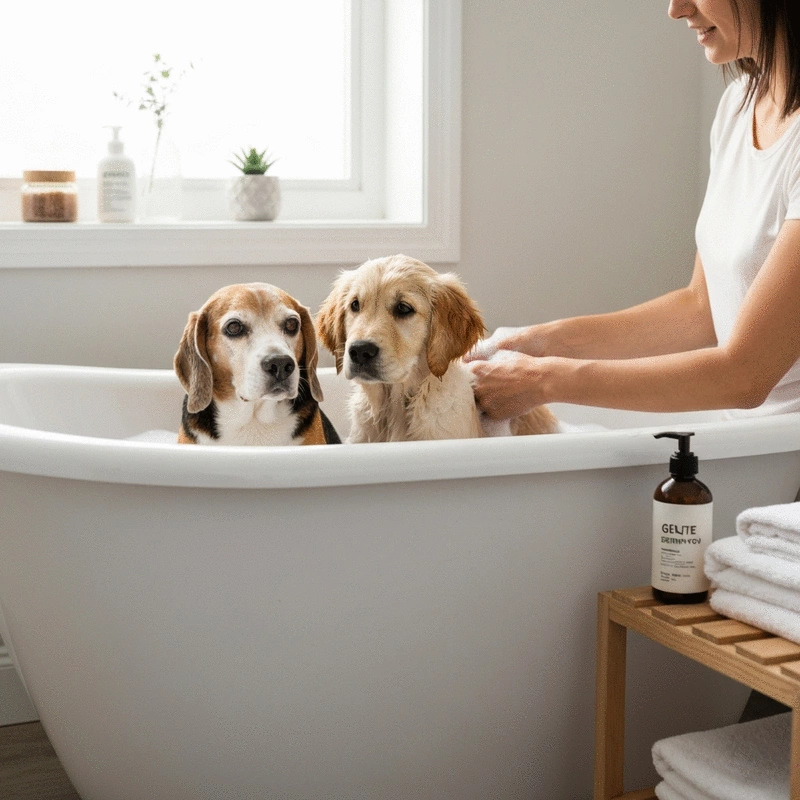
Creating a calm bathing environment is crucial for both puppies and senior dogs. A few simple adjustments can make all the difference! Start by gathering all your supplies—shampoo, towels, brushes, and perhaps a favorite toy to keep your pup engaged.
Use a non-slip mat to prevent slips and falls.
Ensure the water temperature is warm but not hot—aim for a comfortable range.
Consider background music or soothing noises to create a calming atmosphere.
When your furry friend feels safe and comfortable, bath time becomes a much more enjoyable experience for both of you. And don’t forget to shower them with love and praise throughout the process!
We Want to Hear From You!
What is your biggest challenge when bathing your puppy or senior dog? Share your thoughts below:
Frequently Asked Questions About Bathing Puppies and Senior Dogs
Why do puppies need special bathing techniques?
Puppies have delicate skin and are prone to irritation and anxiety during bath time. Gentle handling, warm water, and hypoallergenic shampoos are crucial to ensure a positive and comfortable experience for them.
What specific considerations are there for bathing senior dogs?
Senior dogs often have thinning skin, less oil production, and mobility issues. They require extra support like non-slip mats, moisturizing pH-balanced shampoos, and a gentle approach to prevent falls and discomfort. Regular vet check-ups are also important to monitor their skin conditions.
What kind of shampoo should I use for my puppy's sensitive skin?
For puppies with sensitive skin, it's best to use hypoallergenic shampoos. These products are formulated to be mild and free from harsh chemicals that could cause irritation or dryness.
How can I make bath time less stressful for my dog?
Creating a calm environment with warm water, non-slip mats, and soothing background music can help. Using treats and praise to reinforce good behavior also encourages a positive association with bath time. Patience and a gentle approach are key.
Are there any specific health checks I should do before bathing my dog?
Yes, before bathing, perform a quick health assessment. Check for any signs of skin irritation, redness, lumps, or bumps. Observe your dog's demeanor for signs of pain or anxiety. If you notice any concerns, consult your vet before proceeding with the bath.
Summarizing Safe Bathing Practices for Puppies and Senior Dogs
When it comes to bathing our furry friends, ensuring their safety and comfort is paramount, especially for puppies and senior dogs. In this section, let's recap the key techniques and precautions we discussed to make bath time a positive experience for dogs at different life stages. By keeping these techniques in mind, we can ensure that our pets remain happy and healthy during their grooming routines.
For puppies, gentle handling is crucial. Using gradual wetting and soft communication can help them feel secure. It’s also essential to choose the right products—opt for hypoallergenic shampoos to protect their sensitive skin. Meanwhile, senior dogs may require special considerations such as avoiding slipping and using moisturizing, pH-balanced shampoos to keep their skin healthy.
Use gentle techniques when bathing puppies.
Choose puppy-specific products that are mild and hypoallergenic.
For senior dogs, focus on mobility support and skin care.
Implement drying methods that prevent chills for both age groups.
By incorporating these practices, we contribute to a safer and more enjoyable bathing experience for our beloved pets!
Encouraging a Positive Bathing Experience for Your Dogs
Creating a positive bathing experience is all about patience and gentleness. Remember, our dogs can sense our emotions, so a calm demeanor goes a long way! I encourage all dog owners to approach bath time as an opportunity for bonding. Use treats and praise to reinforce good behavior, making each bath a moment of joy rather than stress.
Implementing the tips we've shared can transform the way your dogs feel about bath time. Consistency and a gentle touch will help our furry friends associate baths with a soothing ritual rather than a chore. So, let’s make a commitment to ensure that bath time is as pleasant as possible for both puppies and senior dogs!
Additional Grooming Considerations for Puppies and Senior Dogs
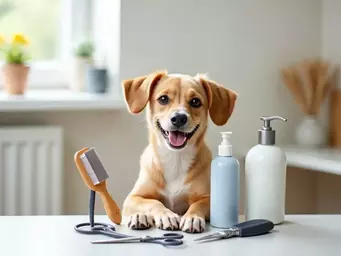
Bathing is just one part of maintaining our dogs' hygiene. We should also consider grooming tools and accessories that complement the bathing process! This includes brushes for detangling coats and keeping them shiny, as well as proper nail trimming tools to ensure their paws are well cared for.
Here are a few grooming essentials to keep in mind:
A soft-bristle brush for puppies to prevent skin irritation.
A de-shedding tool for senior dogs to help manage their coat.
Nail clippers or grinders for regular maintenance.
Ear cleaning solutions to promote ear health.
Incorporating these grooming practices into your routine not only maintains hygiene but also strengthens the bond between you and your dog. Remember, every moment you spend grooming is an opportunity for connection and care! For a comprehensive list of tools you might need, check out our guide on must-have dog grooming tools.
Recap of Key Points
Here is a quick recap of the important points discussed in the article:
Puppies require gentle handling and hypoallergenic products due to their sensitive skin.
Senior dogs need additional mobility support and moisturizing shampoos to maintain skin health.
Always assess your dog's health before bathing to identify any potential concerns.
Creating a calm and safe bathing environment is essential for a positive experience.
Using treats and praise can help reinforce positive associations with bath time for both puppies and senior dogs.
Clara H. Thompson
Clara H. Thompson is a passionate dog care advocate with over a decade of experience in pet grooming and hygiene. With a strong background in animal care and a love for dogs of all breeds, Clara dedicates her expertise to empowering fellow dog owners with practical tips and evidence-based guidance. Her mission is to promote the health and happiness of dogs through effective bathing and grooming routines.
Canine Wash Wisdom is dedicated to empowering dog owners with essential insights and practical guidance on bathing, grooming, and maintaining their pets' coats. Our mission is to demystify dog hygiene and equip you with actionable tips for a happy, healthy, and clean canine companion.
Start your grooming session by gathering all essentials: dog-specific shampoo, brushes, and plenty of treats. Preparation makes for a stress-free bath!
Don’t underestimate the power of positive reinforcement. Reward your pup with treats and praise during and after grooming to build positive associations!
Utilize warm, not hot, water for baths. Lukewarm water is much more comfortable for your dog and helps prevent skin irritation.
Ensure your dog's ears are protected during baths. Cotton balls gently placed in the ear canals can prevent water from entering and causing infections.
Focus on thoroughly rinsing out all shampoo. Residue can lead to skin irritation and dull coats, so rinse until the water runs clear!
Leverage the right brush for your dog's coat type. A slicker brush works wonders for detangling, while a deshedding tool can reduce loose fur.
Create content with search intent in mind. Understanding what your audience is looking for can guide your strategy.
Regularly update your content. Fresh and updated posts signal to search engines that your site is active and relevant.
Use descriptive and user-friendly URLs. Clean URLs improve SEO and provide clarity for your audience.
Incorporate social sharing buttons. They make it easy for readers to share your content, increasing its visibility and reach.
Implement schema markup. Structured data helps search engines understand your content and improves rich snippet visibility.
Optimize for voice search. Use natural language and question-based keywords to align with voice query trends.
Encourage reviews on Google and other platforms. Positive reviews enhance your online reputation and local SEO.
Monitor and improve your page speed. A fast-loading site improves user satisfaction and search engine rankings.
Include a clear call-to-action in every post. This boosts engagement and guides readers to take the next step towards mastering their DIY SEO!